Quick Answer:
The Headless Horseman is the ghost of a Hessian soldier beheaded by cannon fire during the Revolutionary War, immortalized in Washington Irving’s 1820 short story “The Legend of Sleepy Hollow.” Unlike imported European monsters, the Horseman is rooted in documented American history, tied to a real place (Sleepy Hollow, New York), and built on genuine ambiguity about whether he’s a ghost or a prank.That blend of history, folklore, and uncertainty is what has kept him galloping through American imagination for more than two centuries.
Summary Outline –
"The Legend of Sleepy Hollow" endures because it never fully answers its own mystery, and that unresolved tension is precisely what makes it worth revisiting every autumn.
This piece walks through the man at the center of the legend, the folklore that shaped the Horseman himself, the chase that made the story famous, and how this galloping specter stacks up against the other icons of Halloween.
- post content … analysis/ headless horseman

first “headless horseman” idea

copyright image by 123rf.com
Section 1: Ichabod Crane, The Man Behind The Legend
Notes:
-
Before any ghost appears on the page, Washington Irving spends considerable time building the human being the story is really about.
Understanding Ichabod Crane’s character is essential to understanding why the legend resonates the way it does.

-
A Schoolmaster From Connecticut
Ichabod Crane arrives in Sleepy Hollow, New York, as the village schoolmaster, a lanky, awkward outsider in a close-knit Dutch farming community near Tarrytown.
He is strict with his students but not unkind, and he supplements his meager teaching income by giving singing lessons, a detail Irving uses to show off Ichabod’s vanity about his own voice.
He boards with local farming families on a rotating basis, which gives him plenty of opportunity to hear ghost stories from farmers’ wives and to develop a hearty appetite for home-cooked meals.
-
His Motives And Flaws
Literary critics have long debated what Ichabod actually represents. According to a 1961 essay by Daniel G. Hoffman, the story dramatizes a cultural clash between the Yankee newcomer and the rustic backwoodsman, a theme that would reappear throughout American literature for decades.
Other scholars, including Robert Bone, have pointed to Ichabod’s materialism as his defining trait: he is as drawn to Katrina Van Tassel’s family farm and its abundant promise of wealth as he is to Katrina herself.
This mix of superstition, appetite, and ambition makes him an easy target for mischief, and an easy character to root against.
-
The Rival: Brom Bones
Standing opposite Ichabod is Brom Van Brunt, known locally as Brom Bones, a muscular, boisterous prankster and the village’s star horseman.
Brom has already scared off most of Katrina’s other suitors through sheer physical intimidation, but Ichabod avoids direct confrontation, so Brom turns to pranks instead, filling the schoolhouse with smoke and training a dog to howl at Ichabod’s heels.
This rivalry sets the stage for everything that follows.
-
Washington Irving, The Storyteller
Washington Irving wrote "The Legend of Sleepy Hollow" while living in England, and it was published in 1820 as part of "The Sketch Book of Geoffrey Crayon, Gent."
Irving, born in New York City in 1783, became the first American writer to achieve international literary fame, and "The Sketch Book" is often credited with helping establish the short story as a serious American literary form.
More Supporting Information
(click to view sample images, summary table, and useful ideas – or scroll to side note and next topic)
Section Content Ichabod Crane, The Man Behind The Legend Washington Irving dedicates significant time to building Ichabod Crane’s character before introducing any ghostly elements.
Understanding Crane’s character is key to grasping the resonance of the legend.
A Schoolmaster From Connecticut Ichabod Crane arrives in Sleepy Hollow as a schoolmaster, an awkward outsider in a tight-knit Dutch farming community.
He is strict but kind with his students and earns extra income by giving singing lessons. A detail about his vanity regarding his voice is highlighted.
Boarding with local families, he hears ghost stories and enjoys hearty home-cooked meals.
His Motives And Flaws Literary critics have debated Ichabod’s representation. Daniel G. Hoffman suggests the story portrays a cultural clash between the Yankee newcomer and the rustic backwoodsman, while Robert Bone emphasizes Ichabod’s materialism.
His superstition, ambition, and appetite make him both a target for mischief and a character audiences find easy to root against.
The Rival: Brom Bones Brom Van Brunt, or Brom Bones, is a muscular, boisterous prankster and star horseman of the village.
Brom intimidates Katrina’s other suitors, but with Ichabod, he resorts to pranks such as filling the schoolhouse with smoke or training a dog to howl at him.
This rivalry sets up the events of the story.
Washington Irving, The Storyteller Washington Irving wrote “The Legend of Sleepy Hollow” while living in England.
Published in 1820 as part of “The Sketch Book of Geoffrey Crayon, Gent.”, it gained Irving international fame.
Born in 1783 in New York City, Irving helped establish the short story as a serious American literary form.


copyright image by 123rf.com
Rekindling the Joy of Reading
With the pull of screens and endless digital entertainment, how many children today turn the pages of timeless classics like Washington Irving’s The Legend of Sleepy Hollow?
Encouraging a love for reading may require intentional effort, such as setting up a cozy, distraction-free reading nook and carving out dedicated time for books.

By fostering this habit early, you can give kids the chance to explore a world of imagination and stories that stand the test of time.
view ideas: Create A Play Homeschool Room(new win)
[ amazon: book: washington irving: the legend of sleepy hollow ]
[ amazon: ichabod crane poster ]

-
Scroll up to directory … or scroll to next section about: the legend of sleepy hallow …


second “photo remodeling” idea
copyright image by 123rf.com
Section 2: What Was The Legend Of Sleepy Hollow
Notes:
-
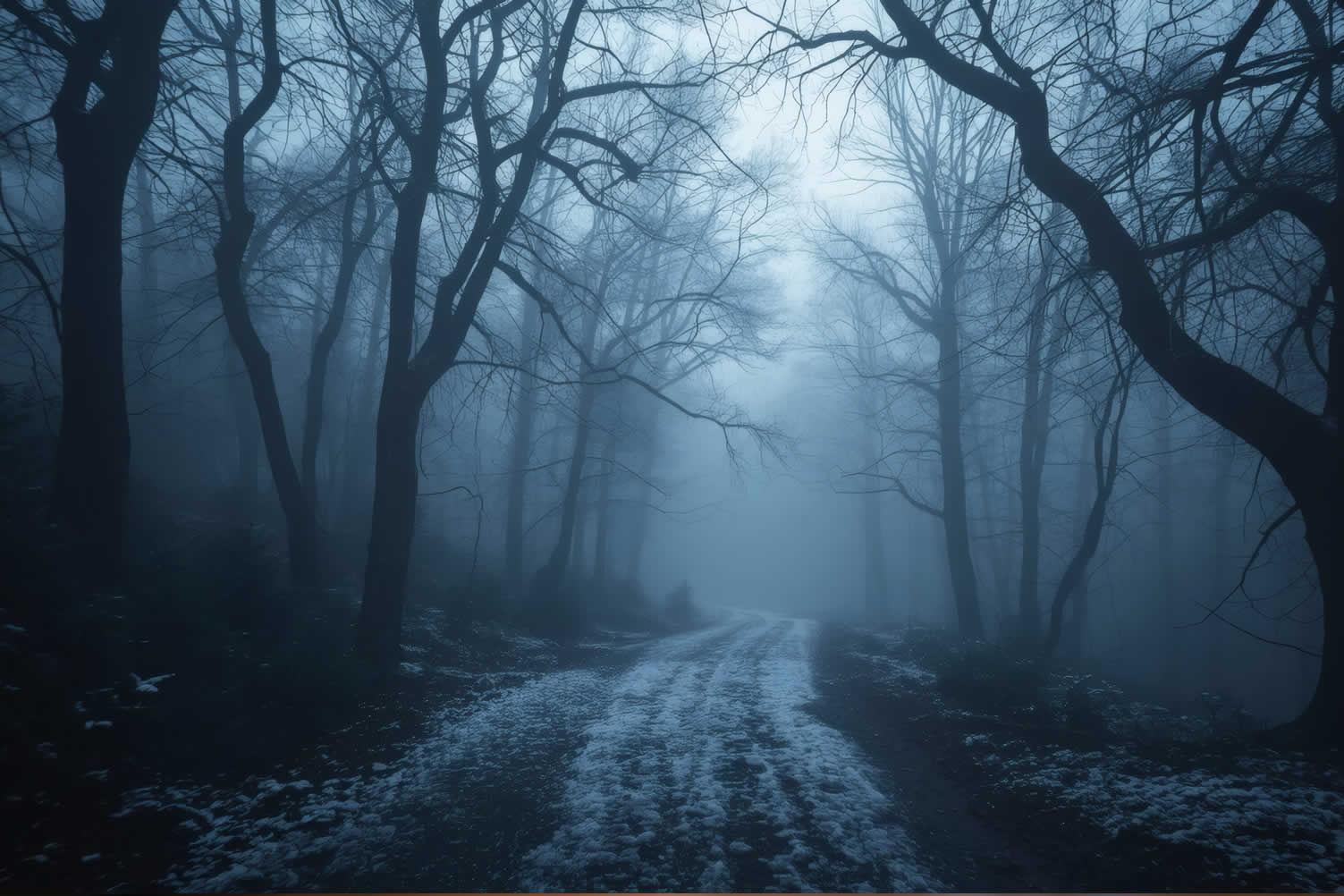
To appreciate the Headless Horseman, it helps to understand the world Irving built around him. Sleepy Hollow is described as a small, drowsy valley where time seems to move more slowly and residents are unusually prone to believing in the supernatural.
-
A Valley Known for Its Haunted Reputation
Sleepy Hollow is a real place, located in what is now Tarrytown, New York. Irving describes it as having a "drowsy, dreamy influence" that hangs over the entire valley, making its residents especially prone to believing in ghosts and omens.
This wasn’t just literary flourish. The Books & Culture literary analysis notes that Irving was deliberately adapting the European Gothic tradition, which relied on castles and ruins, into something distinctly American: a haunted landscape shaped by Revolutionary War history rather than medieval legend.
-
The Hessian Soldier Behind the Myth
Irving describes the Horseman as "the ghost of a Hessian trooper, whose head had been carried away by a cannonball, in some nameless battle during the Revolutionary War."
Hessians were German mercenary soldiers, named for the Hesse-Kassel region they came from, hired by the British to fight against American revolutionaries. Many colonists viewed them with genuine dread.
There’s a documented event that may have inspired this detail. According to Astonishing Legends’ research into the legend’s origins, Major General William Heath of the American army recorded a skirmish near White Plains on November 1, 1776, in which "a shot from the American cannon at this place took off the head of a Hessian artilleryman."
A nameless Hessian grave still exists in Sleepy Hollow Cemetery today, and visitors and historians alike have long wondered if it belongs to the man behind the myth.
-
An Older Folklore Connection
Some researchers trace the Horseman’s roots even further back, to Irish folklore. The dullahan, a headless fae figure, rides a horse while carrying his own head, much like Irving’s creation, and wields a whip fashioned from a human spine.
Whether Irving drew directly from this tradition or arrived at a similar image independently, the parallel shows how deeply the "headless rider" archetype runs through Western folklore.
More Supporting Information
(click to view sample images, summary table, and useful ideas – or scroll to site note and next topic)
Aspect Description Key Details The Setting Sleepy Hollow is a small valley characterized by its slow-moving time and a supernaturally rich atmosphere. Located in present-day Tarrytown, New York, the valley is described with a “drowsy, dreamy influence” making its residents prone to belief in ghosts and omens. Historical Inspiration Irving tied the legend to American Revolutionary history rather than European medieval traditions. A Hessian soldier decapitated by cannon fire during a skirmish in 1776 is thought to have influenced the Headless Horseman’s origin.
A Hessian grave exists in Sleepy Hollow Cemetery.
European Folklore Connection The legend may have roots in Irish folklore, specifically referencing the fae figure known as the dullahan. The dullahan is a headless rider carrying his head and wielding a whip made of a human spine, a striking parallel to the Headless Horseman. 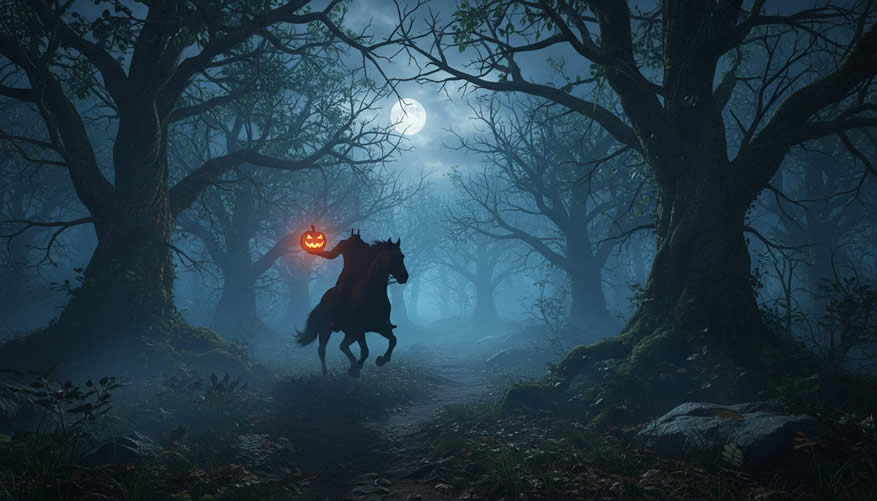
copyright image by 123rf.com
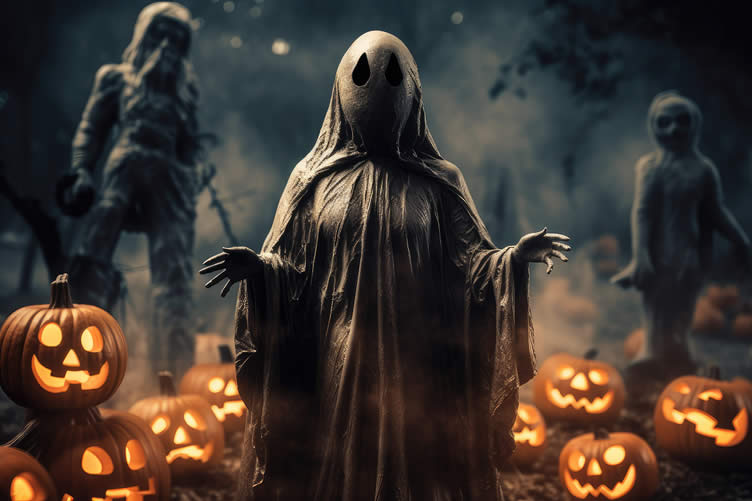
Decorating a Halloween Cemetery
As Halloween approaches, transforming your front yard into a haunting graveyard can be an easy and eye-catching way to celebrate the season.
Stick to the basics with weathered decorative tombstones scattered across your lawn for a chilling yet tasteful effect.
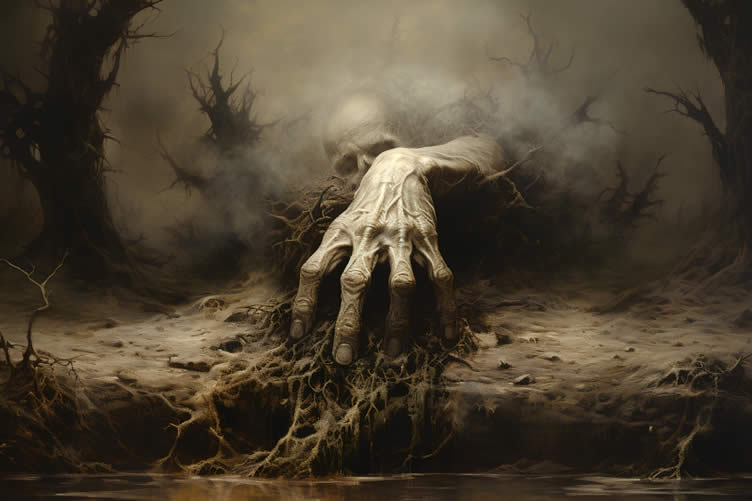
Add some dry leaves, faux cobwebs, or even a creepy lantern to amplify the ambiance.
A skeleton hand bursting through the ground or a crow perched atop a stone can provide just the right amount of thrill without going overboard.
Simple, eerie, and seasonally perfect!
view ideas: Front Yard cemetery(new win)
[ amazon: book: hessians soldiers ]
[ amazon: sleepy hollow t-shirt ]
-
Scroll up to directory … or scroll to next section about: meeting headless horseman …

Tackling home upgrades and fulfilling all your home improvement needs …

… save this curated directory of ideas for future reference.

May We Suggest Other Photo Remodeling Ideas About
“Decorative Ideas for Your Home …” (new win)



third “photo remodeling” idea
AI generated image by 123rf.com
Section 3: Meeting The Headless Horseman
Notes:
-
The encounter that gives the story its name happens late at night, after Ichabod’s hopes with Katrina have been dashed, and it remains one of the most vivid chase scenes in American fiction.
-
A Disappointing Night
Ichabod attends a party at the Van Tassel farm, confident in his standing with Katrina, but something goes wrong during their final conversation and he leaves the gathering crestfallen.
The ride home that follows takes him past places already soaked in local ghost stories, including the supposedly haunted tree linked to Major André.
-
A Dark Figure Joins The Road
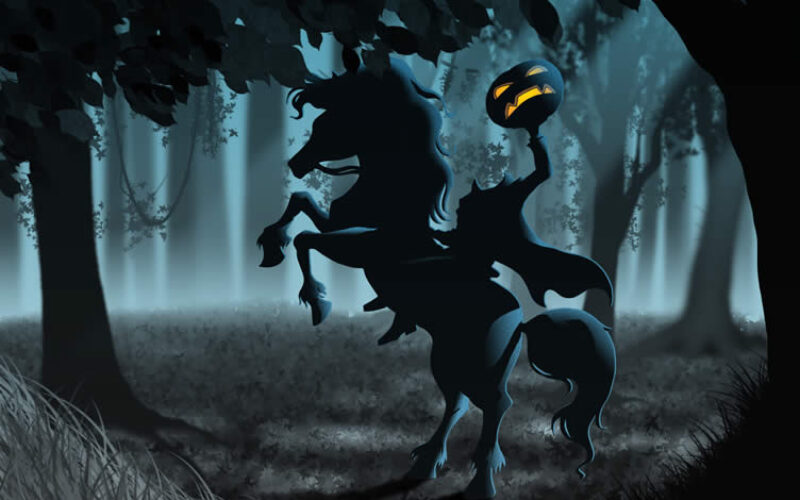
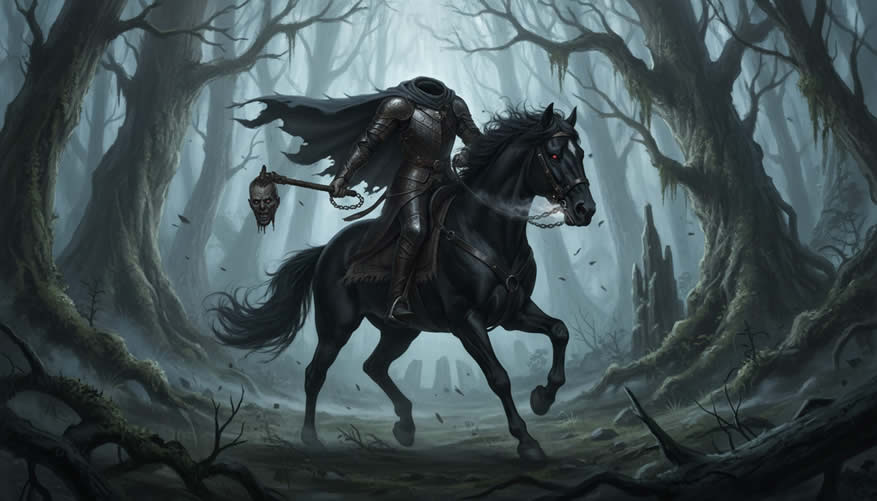
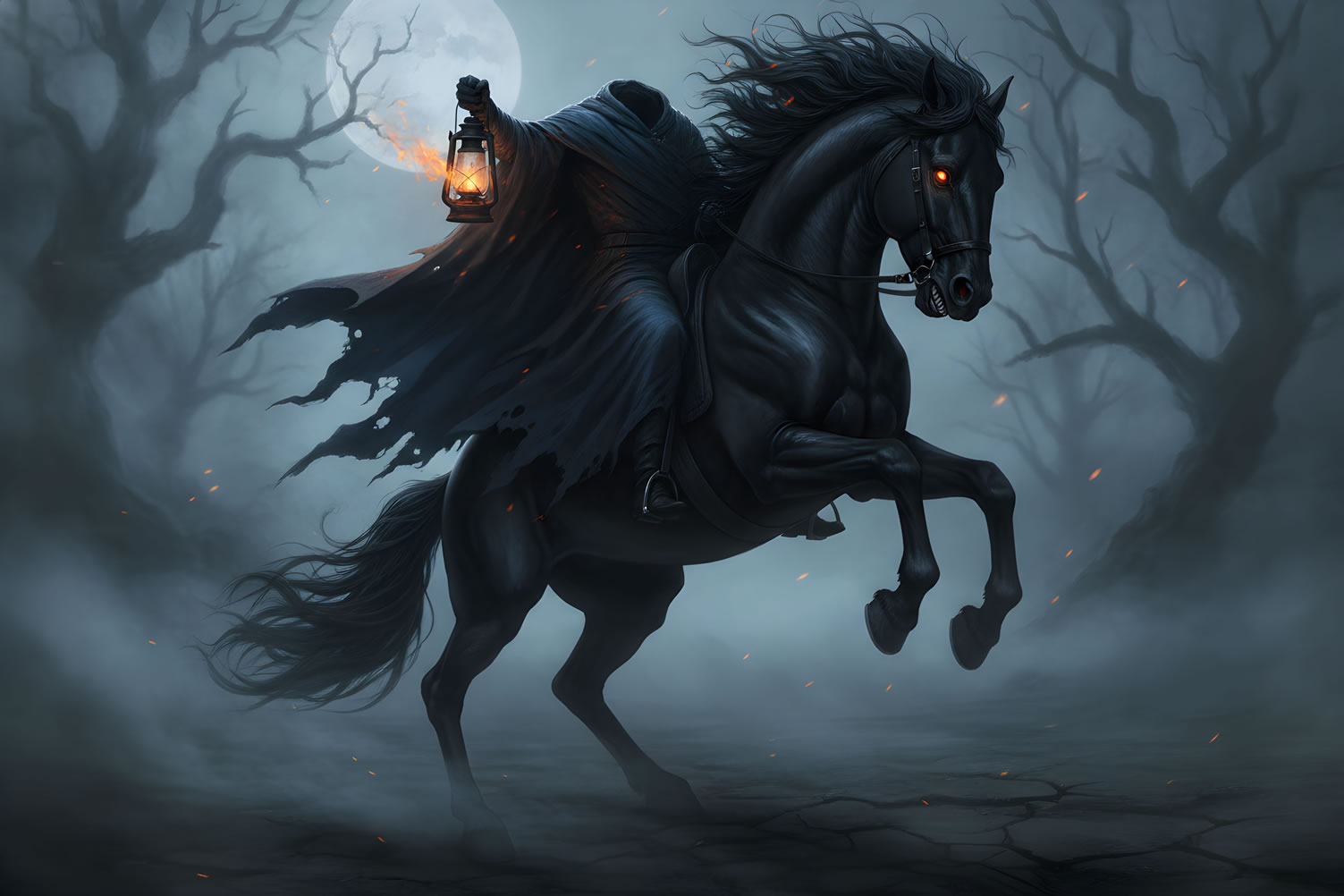
As Ichabod rides on, he notices a large, silent figure waiting near the tree. It does not answer his nervous calls, but as he passes, it begins moving alongside him on a powerful black horse.
Only after some distance does Ichabod realize, with mounting horror, that the rider has no head on his shoulders. Instead, the head rests on the saddle in front of him.
-
The Chase To The Bridge
Local legend holds that the Horseman cannot cross the bridge near the old church, so Ichabod spurs his borrowed, unskilled horse toward it in a desperate race. He makes it across, but makes the fatal mistake of looking back.
Rather than vanishing as the legend promised, the Horseman hurls his severed head directly at him, knocking Ichabod from his saddle.
-
What Was Left Behind
The next morning, Ichabod’s horse returns to its owner alone. A search turns up only hoofprints, Ichabod’s hat, and a smashed pumpkin lying nearby. Ichabod himself is never seen in Sleepy Hollow again.
Irving closes the story with a telling detail: Brom Bones, who married Katrina shortly afterward, was known to laugh knowingly whenever the tale was retold, especially at the mention of the pumpkin, suggesting to careful readers exactly who, or what, really chased Ichabod that night.
More Supporting Information
(click to view sample images, summary table, and useful ideas – or scroll to site note and next topic)
Section Description Key Events Meeting The Headless Horseman The encounter that gives the story its name happens late at night, after Ichabod’s hopes with Katrina have been dashed.
It becomes one of the most vivid chase scenes in American fiction.
Ichabod’s disillusionment leads to a chilling nighttime episode with the Headless Horseman. A Disappointing Night Ichabod attends a gathering at the Van Tassel farm, optimistic about his standing with Katrina.
However, after their final conversation, he leaves dejected.
Disheartened, he begins the fateful ride home through areas filled with haunting local ghost lore. A Dark Figure Joins The Road As Ichabod rides past a haunted tree linked to Major André, he notices a large, silent figure mounted on a black horse.
Realizing the rider has no head but carries it on the saddle, Ichabod is filled with terror.
The Headless Horseman begins to follow Ichabod, leading to an urgent and fear-filled escape attempt. The Chase To The Bridge Legend says the Headless Horseman cannot cross the bridge near the church. Ichabod makes it across but makes the critical mistake of looking back.
The Horseman hurls his severed head at him, unseating Ichabod.
Ichabod races to the bridge in desperation, but the chase ends tragically with his fall. What Was Left Behind By morning, Ichabod’s horse returns alone. Searches find only hoofprints, his hat, and a smashed pumpkin.
Ichabod disappears from Sleepy Hollow forever.
Brom Bones, who marries Katrina later, laughs knowingly at mentions of the pumpkin, hinting at a staged chase rather than a ghostly encounter. 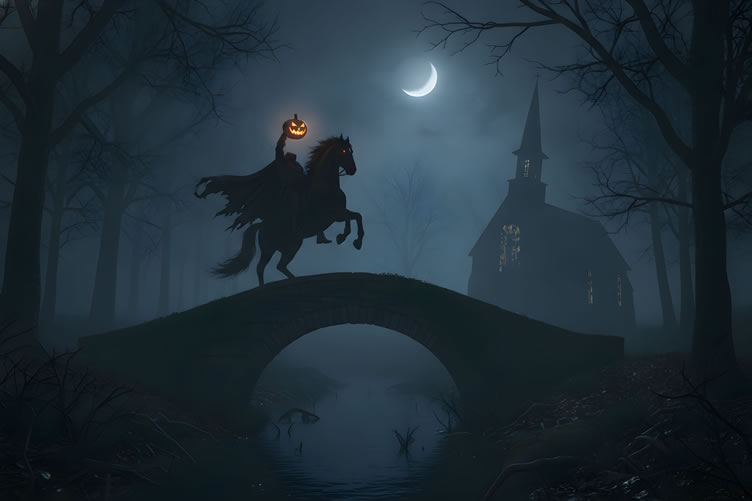
copyright image by 123rf.com
The Hidden Life Beneath the Trees
Are trees like the haunted one linked to Major Andre in Sleepy Hollow truly haunted? Probably not—that’s the realm of folklore and storytelling.
However, beneath the forest floor lies a phenomenon that’s far from mythical.

The mycorrhizal network, a vast underground web formed by fungi, connects trees and plants, facilitating the exchange of nutrients, resources, and even warning signals.
Unlike ghost stories, this “wood wide web” is backed by science, with researchers uncovering its vital role in supporting ecosystems, from ancient forests to backyard gardens.
view ideas: The Mycorrhizal Network(new win)
[ amazon: headless horseman costume ]
[ amazon: headless horseman print ]
-
Scroll up to directory … or scroll to next section about: comparing against other ghouls …
fourth “photo remodeling” idea
AI generated image by 123rf.com
Section 4: How The Headless Horseman Compares
… to other Halloween ghouls
Notes:
-
Halloween offers no shortage of iconic monsters, but the Headless Horseman occupies a distinct place among them.
Comparing him to other classic figures helps explain why he has remained a seasonal favorite for over two hundred years.
-
Dracula, The Aristocratic Predator
Dracula draws his fear from seduction and transformation: an undead nobleman who preys on the living and converts his victims into creatures like himself.
His terror is supernatural, elegant, and explicit. There is no ambiguity about what Dracula is.
-
Frankenstein’s Monster, The Tragic Creation
Frankenstein’s Monster inspires a different kind of unease, rooted in pity as much as fear. He is man-made, assembled from the dead, and his horror lies in what human ambition can produce when pushed too far.
-
The Werewolf, The Beast Within
The werewolf’s fear comes from transformation and loss of control, a reminder that civility can be stripped away by instinct, often tied to something as regular and inescapable as the lunar cycle.
-
The Headless Horseman’s Distinct Edge
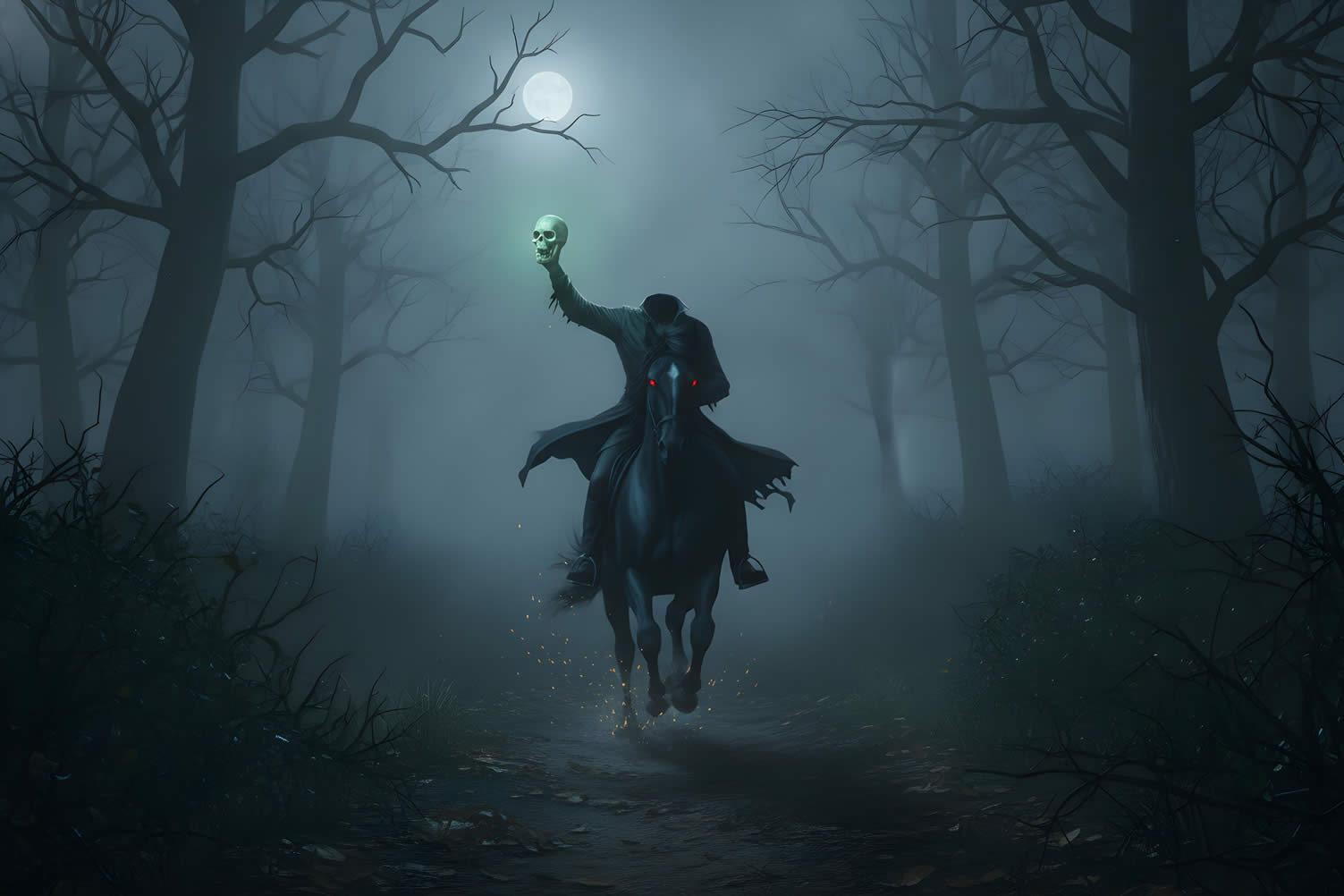
The Horseman works differently from all of these. Unlike Dracula or the werewolf, his supernatural status is never confirmed.
Irving deliberately leaves open the possibility that Brom Bones orchestrated the entire encounter as an elaborate prank, using a very real pumpkin rather than a severed head. That ambiguity is the story’s real engine of fear.
Readers are never allowed to settle comfortably into either explanation, and that unresolved tension, paired with a backstory rooted in genuine Revolutionary War history, gives the Horseman a grounded, almost believable menace that purely fantastical monsters simply cannot replicate.
More Supporting Information
(click to view sample images, summary table, and useful ideas – or scroll to site note and next topic)
Monster Source of Fear Key Characteristics Dracula Fear of seduction and supernatural transformation An undead nobleman who preys on the living and turns victims into vampires.
His terror is explicit, elegant, and rooted in his supernatural nature.
Frankenstein’s Monster Fear of human ambition and its consequences A man-made being, assembled from the dead, symbolizing the horrors that arise when ambition and science are pushed too far. Inspires both pity and fear. Werewolf Fear of transformation and loss of control A creature that represents the primal instincts lying beneath civility, often linked to the cycles of the moon.
Fear emerges from its unpredictable nature.
Headless Horseman Fear of ambiguity and unresolved tension A figure rooted in history, where his supernatural status is intentionally left uncertain.
The story’s terror stems from psychological tension rather than explicit horror.
copyright image by 123rf.com
The Real Horror Lurking in Your Home
Do you want to know what’s more frightening than Dracula, Frankenstein, werewolves, or the Headless Horseman?
The rising cost of electricity.
This modern-day monster creeps into your home with every flip of a switch, leaving you clutching your wallet in fear.

To ward off this scary foe, you need to take proactive steps—like upgrading to energy-efficient appliances, using smart thermostats, and sealing up drafty windows.
With the right tools, you can turn the tables and keep the energy beast at bay for good.
view ideas: Managing Rising Electricity Costs(new win)
[ amazon: vampire costume ]
[ amazon: frankenstein blow up inflatable ]
-
Scroll up to directory … or scroll to next section viewing the FAQs …
SHARE IT ..! Someone in your network might benefit this review of the sleepy hallow headless horseman. Feel free to share it on Facebook, X (formally Twitter), LinkedIn, or Pinterest!


Download this PDF for a concise summary of everything you need to know about …?

Find Interior Design Services Decorators Interior Designers Furniture Painting & Staining top-rated, pre-screened local contractors FREE: download contractor selection enter zip code – powered by HomeAdvisor ™
Quick Contractor Guides selecting negotiating working with inspecting

fifth “photo remodeling” idea

AI generated image by 123rf.com
Section 5: Frequently Asked Questions
Notes:
-
-
Was the Headless Horseman real in the story?
Irving never confirms it either way. The ending strongly hints that Brom Bones disguised himself as the Horseman to scare off his rival, but the story deliberately preserves enough mystery that readers, and the superstitious townsfolk of Sleepy Hollow, can believe whichever version they prefer.
-
What happened to Ichabod Crane at the end?
Ichabod disappears from Sleepy Hollow after the encounter on the bridge. Only his hat and a smashed pumpkin are found.
Irving later suggests Ichabod moved away and went on to live elsewhere, though the townspeople prefer the more dramatic explanation that he was carried off by the Horseman.
-
Who was Brom Bones, and why does he matter?
Brom Bones, formally Brom Van Brunt, is Ichabod’s rival for Katrina Van Tassel’s affection. He is strong, skilled on horseback, and known for his pranks.
His behavior after Ichabod’s disappearance, particularly his knowing laughter at the mention of the pumpkin, strongly implies he was behind the Horseman costume.
-
Where is Sleepy Hollow actually located?
Sleepy Hollow is a real village in New York State, located near Tarrytown along the Hudson River.
Washington Irving used this real geography as the backdrop for his fictional tale, and the area still embraces its connection to the legend today.
-
What inspired the Headless Horseman legend?
Within the story, the Horseman is said to be the ghost of a Hessian soldier decapitated by a cannonball during the Revolutionary War.
Scholars have also connected the figure to older European folklore, including the Dullahan of Irish mythology, a headless rider associated with death.
-
Why is Ichabod Crane considered an unusual hero?
Ichabod lacks the typical bravery or charm of a conventional protagonist.
He is superstitious, vain, and motivated as much by Katrina’s inheritance as by affection for her, which has led critics to read him as a satirical figure rather than a sympathetic one.
-
How does the Headless Horseman differ from monsters like Dracula or Frankenstein’s Monster?
Unlike those overtly supernatural figures, the Horseman’s existence is never definitively confirmed.
His fear comes from ambiguity and historical grounding rather than outright fantasy, which sets him apart from monsters whose supernatural nature is never in question.
-
Why has this story remained popular for so long?
The combination of vivid small-town atmosphere, a genuinely tense chase scene, and an ending that refuses to resolve its own central mystery has made the story adaptable across generations, inspiring countless films, television adaptations, and retellings since its 1820 publication.
More Supporting Information
(click to view summary table, and side note – or scroll to next topic)
Question Answer Was the Headless Horseman real in the story? Irving never confirms it either way.
The ending strongly hints that Brom Bones disguised himself as the Horseman to scare off his rival, but the story deliberately preserves enough mystery that readers, and the superstitious townsfolk of Sleepy Hollow, can believe whichever version they prefer.
What happened to Ichabod Crane at the end? Ichabod disappears from Sleepy Hollow after the encounter on the bridge. Only his hat and a smashed pumpkin are found.
Irving later suggests Ichabod moved away and went on to live elsewhere, though the townspeople prefer the more dramatic explanation that he was carried off by the Horseman.
Who was Brom Bones, and why does he matter? Brom Bones, formally Brom Van Brunt, is Ichabod’s rival for Katrina Van Tassel’s affection. He is strong, skilled on horseback, and known for his pranks.
His behavior after Ichabod’s disappearance, particularly his knowing laughter at the mention of the pumpkin, strongly implies he was behind the Horseman costume.
Where is Sleepy Hollow actually located? Sleepy Hollow is a real village in New York State, located near Tarrytown along the Hudson River.
Washington Irving used this real geography as the backdrop for his fictional tale, and the area still embraces its connection to the legend today.
What inspired the Headless Horseman legend? Within the story, the Horseman is said to be the ghost of a Hessian soldier decapitated by a cannonball during the Revolutionary War.
Scholars have also connected the figure to older European folklore, including the Dullahan of Irish mythology, a headless rider associated with death.
Why is Ichabod Crane considered an unusual hero? Ichabod lacks the typical bravery or charm of a conventional protagonist.
He is superstitious, vain, and motivated as much by Katrina’s inheritance as by affection for her, which has led critics to read him as a satirical figure rather than a sympathetic one.
How does the Headless Horseman differ from monsters like Dracula or Frankenstein’s Monster? Unlike those overtly supernatural figures, the Horseman’s existence is never definitively confirmed.
His fear comes from ambiguity and historical grounding rather than outright fantasy, which sets him apart from monsters whose supernatural nature is never in question.
Why has this story remained popular for so long? The combination of vivid small-town atmosphere, a genuinely tense chase scene, and an ending that refuses to resolve its own central mystery has made the story adaptable across generations, inspiring countless films, television adaptations, and retellings since its 1820 publication. 
copyright image by 123rf.com
From Fright to Festivity
Mexico’s Day of the Dead transforms the somber idea of mortality into a jubilant celebration of life and love.
Starting on the evening of Halloween and lasting through November 2nd, this vibrant tradition blurs the line between the living and the dead, inviting departed loved ones to reunite with their families.
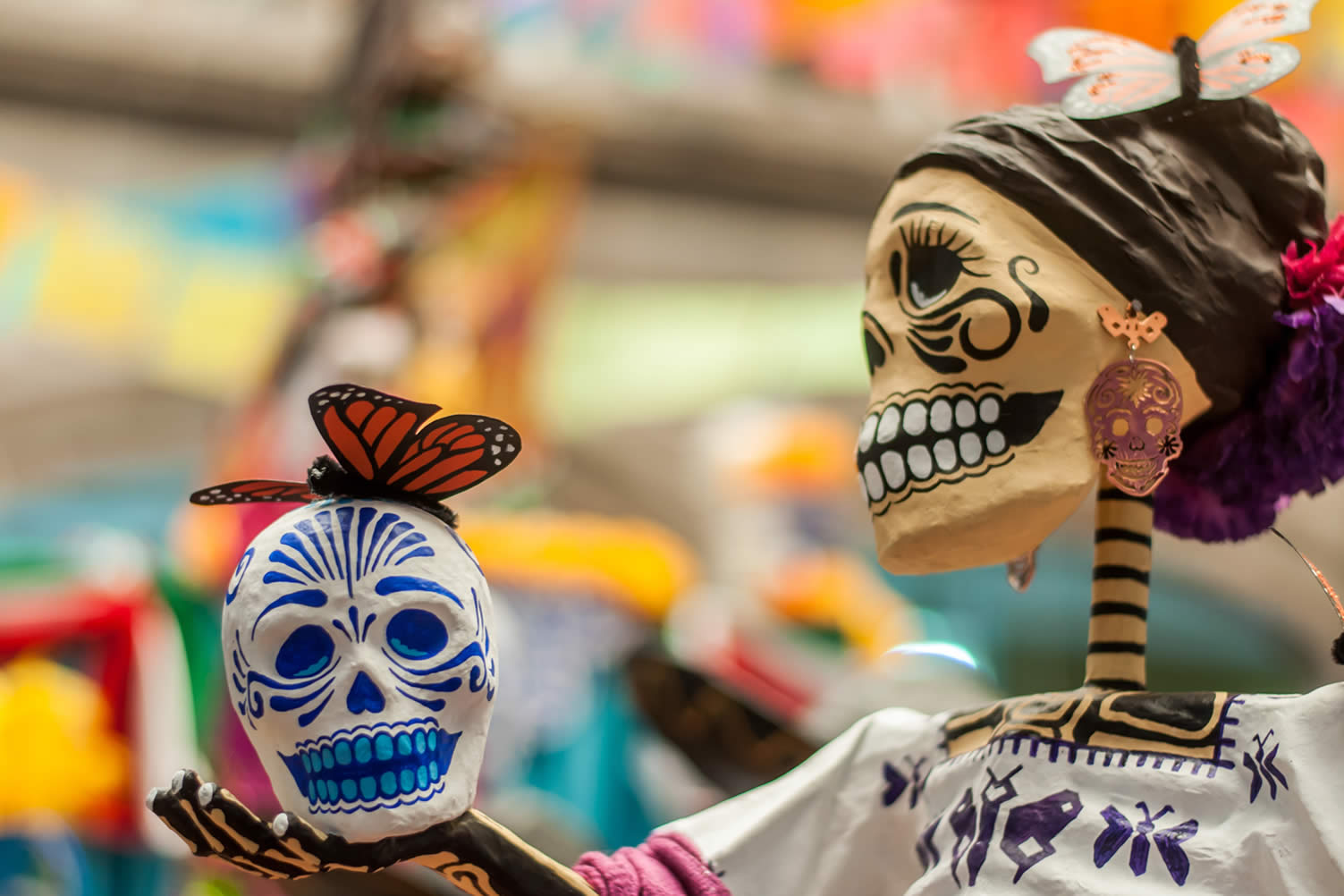
Adorned altars, marigold flowers, music, and feasts fill the air with joy, reflecting a deep reverence for life and the cherished memories of those who have passed.
It’s a time to honor ancestry and celebrate the enduring bond between generations.
view ideas: Day of the Dead(new win)
Scroll up to section directory …
-
-
Conclusion:
… carry the legend into your own Halloween
Washington Irving’s tale endures because it trusts its readers to sit with uncertainty rather than handing them easy answers.
That’s a rare quality in ghost stories, and it’s worth remembering the next time you tell this tale around a fire or by candlelight this season.
If you’re looking for a way to bring the legend home, consider reading Irving’s original text aloud with family this October, pumpkin included.
References
- Washington Irving, "The Legend of Sleepy Hollow," from The Sketch Book of Geoffrey Crayon, Gent. (1820)
- "Mercenaries Descending: Ichabod Crane and His Headless Other," Studies in American Fiction, 2024
- "Brom Bones on the Screen: The Headless Horseman (1934) and Ichabod Crane; or, The Legend of Sleepy Hollow (1949)," Brom Bones Books, October 2025
Scroll up to directory … or scroll to more home decor-related topics …
-
ideas to view and compare from the information discussed above
halloween decorationshalloween spotlighthalloween projector lights
- What comments can you share about your theory of the
Legend of Sleepy Hallow?

Calendar For:
Home Maintenance
File Type:
… view our sharing links below for a quick "share the knowledge"

Cover image credit: headless horsemen by 123rf.com
end of post … please share it!
 |
did you find this Legend of Sleepy Legend review interesting? If so, please share the article with your friends and family! |
Nice pic idea? Leave us a quick comment below.
And please share this pic idea within your social networks.